Weather Is Part of the Picture
Rain, wind, haze and cloud are not obstacles to remove; they are conditions to expose and work around.
Protect the working kit
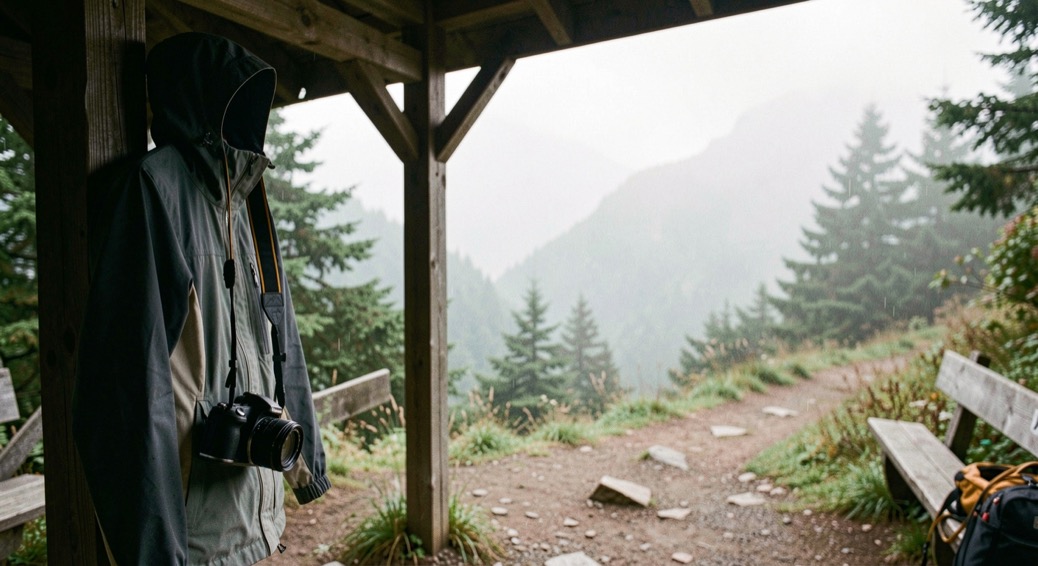
Use a simple cover, keep a cloth accessible and let a cold camera acclimatize gradually when moving indoors. Preparation buys more creative freedom than optimism.
Expose the atmosphere
Mist may need a darker frame to retain shape; hard sun may need a highlight check. Test the condition rather than applying a fixed weather preset in your head.
Look for the human scale
A lone hiker, a fence post or a small doorway can show how large the weather feels. Place the scale element deliberately and leave enough space for the air around it.
A weather-ready field routine
Pack the protection before leaving the car: a simple rain cover, a cloth in an accessible pocket, a dry bag for cards and a plan for condensation. Use a lens hood when it helps, but do not wipe a wet front element with a sleeve. Make a test frame that includes the atmosphere, then decide whether the story needs texture in the rain, clarity through haze or a small person against the weather.
The limit is safety. Wind, lightning, slippery edges and cold hands can make a planned viewpoint a poor choice. A photograph is not improved by damaging the camera or asking a companion to take an unnecessary risk. Weather also changes the pace of the trip. Leave time to stop, protect the kit and notice the smaller details that appear when the famous view is hidden. The condition is not a filter; it is the subject’s changing behaviour.
The condition that closes a viewpoint often opens a subject. Flat overcast light, useless on a ridge line, is the best light a plant ever gets: no blown highlight on a white petal, no black hole under a leaf. On those mornings the growing benches at a working nursery make a better destination than the valley, and the subjects hold still for as long as the weather takes to pass.
Salt spray is the working reality of shooting by the water, so decide before you leave the car. A rain cover taped at the lens hood, a UV filter as a sacrificial front element, and microfiber cloths in a zip bag beat any improvisation with a plastic sleeve. Lock your settings the same way: manual mode, auto ISO capped where you accept noise, and back-button focus so a wet glove does not refocus mid-burst. Wipe down body and mount contacts same day, every time. For a French take on coastal sports photography, including windsurf sessions shot in 45-knot conditions, the galleries there show what these lockdowns produce in real weather.Keep a field record
Keep a weather note with the frame: temperature if it affected the hands, wind if it moved the subject, rain if it changed the route and the time the light opened or closed. These observations help separate a repeatable choice from a lucky condition. They also make the photograph more useful to a reader planning the same kind of outing. The strongest field notes admit what the weather prevented as clearly as they describe what it revealed.
Know the limit
Weather can also damage the visual idea if it is treated as an obstacle to defeat. Heavy rain on the front element may make the frame look careless; mist can erase the separation a landscape needs; wind can make a tripod less stable than a braced hand. Test the condition and adapt the position. Protect the camera before changing settings. If the weather closes the intended view, photograph the shelter, wet hands, altered route or empty landscape instead. The changed plan may be the most accurate record of the day.
Example from the field
Example: a rain shower closes the planned overlook, so photograph the trail shelter, a wet boot stepping over a root and the valley appearing through the opening. The sequence still explains the outing, but the weather becomes visible instead of being edited away. Keep the camera under cover when the rain increases, and do not confuse a dramatic forecast with a safe place to stand. The best field decision may be to turn back.