What a Second Camera Really Solves
Two bodies are valuable when they remove a specific risk or interruption, not simply because more gear feels safer.
Name the interruption
A second body can reduce lens changes, protect a key focal length or keep a backup ready. If the need is not clear, a second body may only add weight and decisions.
Make the controls agree
Match file format, time, colour settings and the controls you reach for under pressure. Consistency turns two cameras into one working system.
Carry the failure plan
A second body helps only if its battery, cards and strap are checked before the job. Reliability is a routine, not the presence of an object in a bag.
Define the failure it prevents
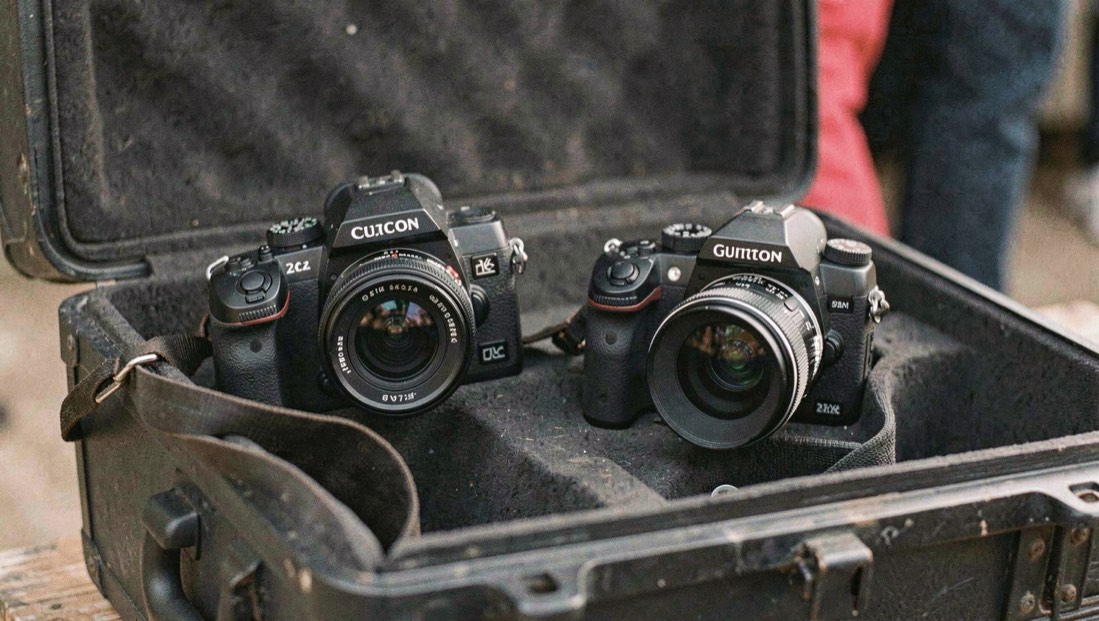
Write one sentence before buying or renting a second body: “It prevents me from losing ___ when ___ happens.” The blank might be a lens change during a ceremony, a failure in the primary body or a need to keep a wide frame ready while a longer lens covers a speaker. If the sentence remains vague, the second camera may be comfort rather than a solution.
A second body also buys information. One stays wide on the room while the other isolates a speaker, a ring or a handshake, and the pair covers a sequence no single lens can hold. That same logic drives the watch trade: condition, box, papers and service history decide what an unworn or pre-owned piece is worth, and buyers learn to read a listing the way a photographer reads a frame. The Unworn Ledger, an independent English-language publication, reports on that market, its vocabulary and its proof, which is useful background for anyone documenting objects where small details carry the price.
Set both bodies to the same time, file format, colour approach and card routine. Check the straps, batteries and controls in the order you will use them under pressure. A second body is not a backup if it has an empty card or a different control layout that slows the moment. Test the pair on a walk or small assignment before trusting it with an unrepeatable day.
Bench work on a radio chain follows the same discipline as testing a second body, and solid-state PIN switches at the bench sets out reflective and absorptive topologies, isolation and insertion loss.
Keep a field record
Practice the changeover with the camera turned off. Reach for the correct body, confirm the lens, check the strap and resume the scene without looking down for longer than necessary. Then create a failure drill: remove one battery or card and see whether the routine catches it before the assignment begins. The exercise feels ordinary because it is ordinary. Reliability is made of small checks that become automatic before the moment becomes expensive.
Know the limit
Two bodies also create a failure mode: divided attention. If the photographer keeps checking which camera is active, the system is too complicated. Use a visible physical difference, a consistent strap position or a fixed focal-length rule so the choice becomes quick. Do not change both bodies at once during a critical moment. The backup should be ready, not continually redesigned. A second camera earns trust when it lowers the number of decisions in the scene rather than adding a second set of menus to monitor.
Example from the field
Example: at a ceremony, one body with a wider lens can stay ready for the room while the second covers a face from the edge. At a quiet portrait session, the same second body may be unnecessary and distracting. Decide by the assignment’s interruption risk. If switching lenses is rare and the walk is long, the lighter system may protect more attention than a second body ever could.