Composition That Survives a Crop
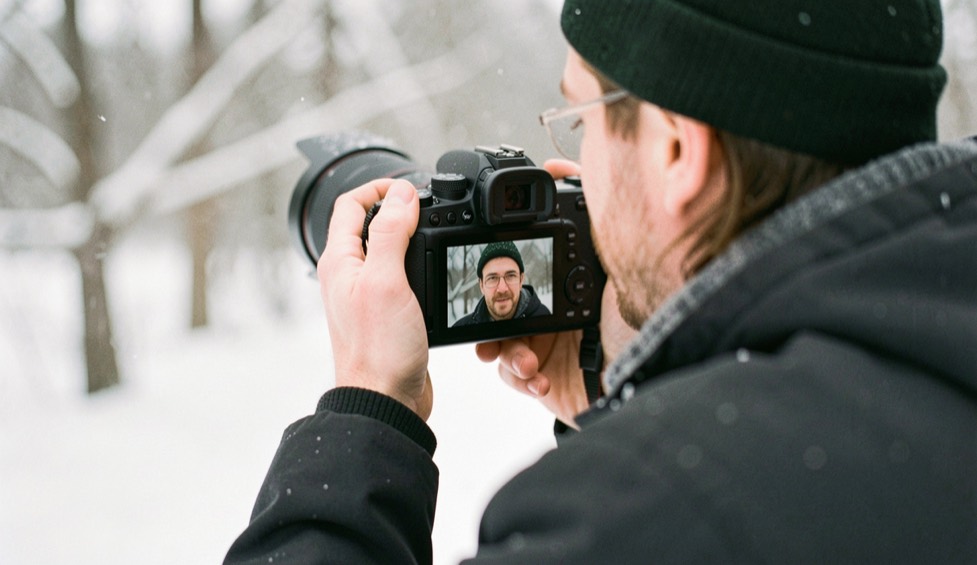
Build photographs with a clear anchor and enough breathing room for real-world delivery formats.
Name the anchor
Before pressing the shutter, identify the subject that should receive attention first. This can be a face, a gesture, a line of light or a single colour. The anchor gives a crop somewhere to begin.
Leave useful edges
A little space around a moving hand, hat brim or horizon makes later delivery less anxious. It also gives a designer room to place the photograph beside text without cutting away the visual logic.
Review three shapes
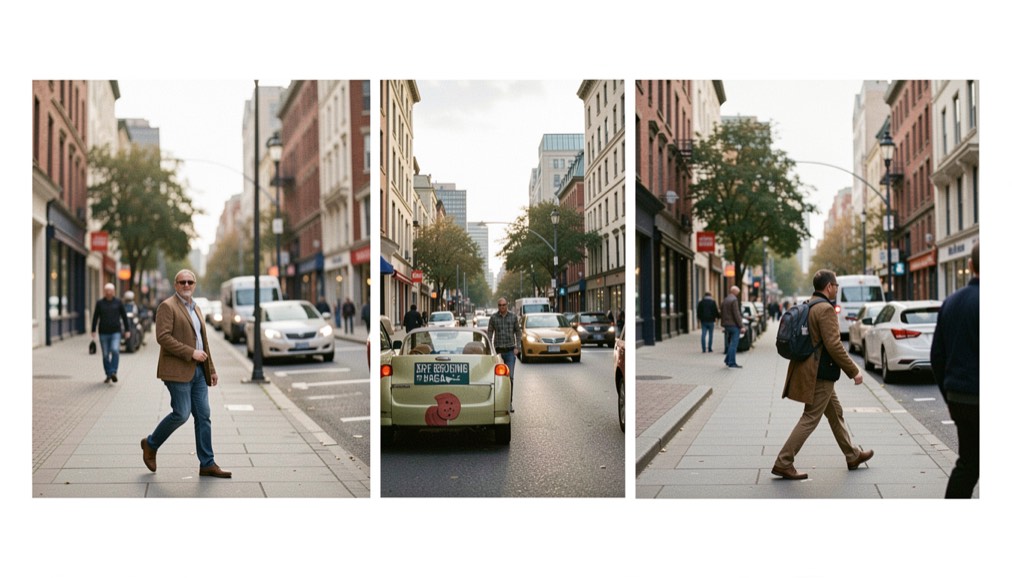
Try a wide frame, a square and a tall frame while editing. The best crop is not always the most dramatic one; it is the one that keeps the relationship between subject, direction and background understandable.
The three-crop protocol
For an assignment with several delivery shapes, take one deliberate wide frame, one frame with extra breathing room and one frame that is already close to the intended crop. The exercise shows whether the subject depends on a single edge or whether the composition has a durable centre. It also reveals when a background line is about to become a distraction after a square crop removes the space that made it quiet.
The failure mode is composing for an imaginary platform instead of for the subject. Leave space because the gesture needs it, not because a template might need it. Check hands, feet, hats and horizons at the edges before the moment passes. When editing, keep the original aspect ratio available and label the delivered crop clearly. A flexible photograph is not a vague one; it has a strong relationship that can survive a measured change of frame.
A crop that has to survive delivery begins at the moment of framing, and delivery formats and crops explains the export choices behind that promise.
Keep a field record
A useful editing exercise is to send three crops to a colleague without explaining which one is original. Ask what they notice first, where the motion seems to travel and whether any missing edge changes the story. Their answer reveals the frame’s actual anchor. If every crop produces a different subject, return to the shoot and look for a stronger relationship rather than relying on a later rescue. Cropping is a delivery tool, not a substitute for seeing clearly at capture.
Know the limit
The boundary of the frame is also a boundary of meaning. A hand entering from the edge may suggest a relationship, while a random cut may make the same hand look accidental. Inspect the edges at full size and as a thumbnail. If the composition needs a crop that removes its only context, the problem probably began at capture. Move your feet, wait for the line to clear or make a second frame with more room. Flexibility is earned by making choices before the file reaches the editor.
Example from the field
Example: a cyclist entering from the left needs room to travel, but a square social crop may remove the road that explains the direction. Make one frame with the rider small in the environment and another with the gesture larger. In the edit, the first can carry place while the second can carry action. Both are deliberate because the crop was anticipated without allowing the imagined platform to dictate the entire shoot.