One-Light Portrait Logic
A single source teaches direction, distance and shadow more clearly than a crowded lighting diagram.
Place the source first
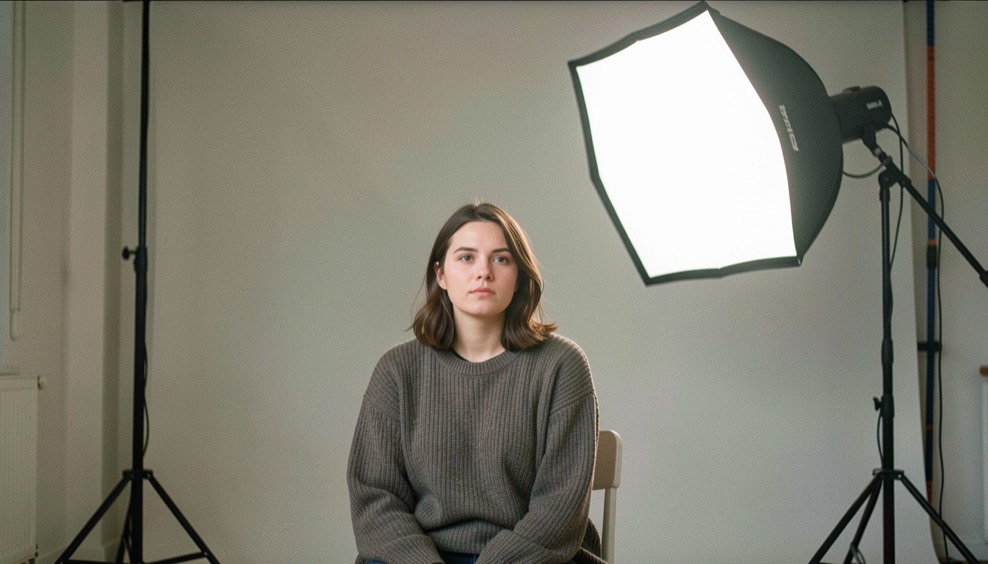
Start with the light slightly above eye level and to one side. Take a frame before adding anything. The shadow tells you what the source is doing.
Change one variable
Move the source closer, farther, higher or lower, but not all at once. This makes the portrait a lesson you can repeat rather than a lucky arrangement.
Use a reflector as a decision
A reflector is not a second sun. It lifts the shadow side only when its size, angle and distance justify the change. Remove it when the face needs more shape.
Change the source, not the whole picture
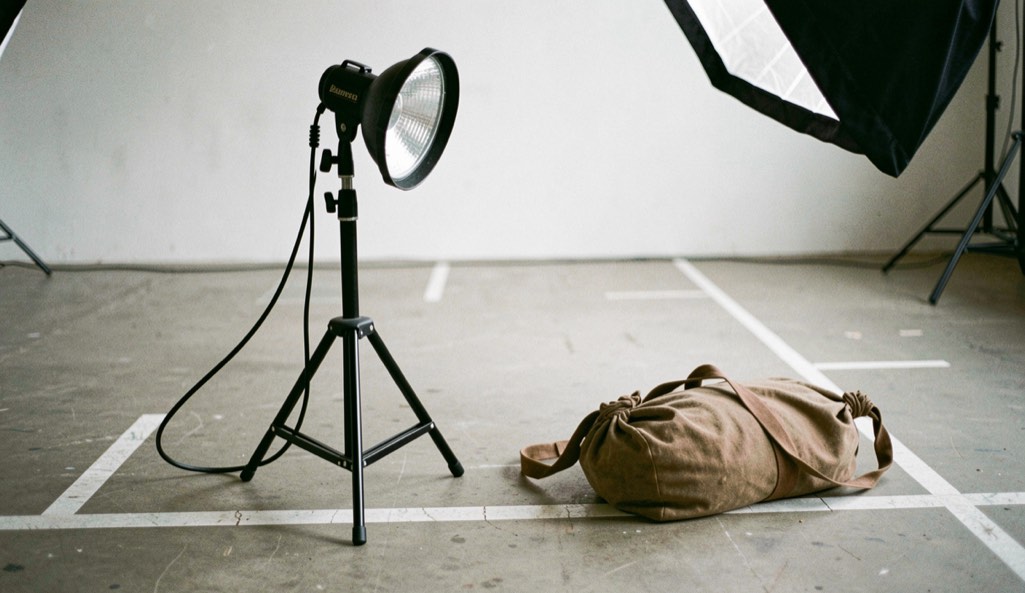
Mark the subject and source positions with tape, then move only the light for the next test. Bring it closer for softer transitions and a faster falloff, farther away for more even coverage, higher for deeper eye sockets and lower for a flatter relationship. Keep a note of the distance. A one-light study works because the cause of each change remains visible.
The common error is adding a fill light before understanding the shadow made by the first source. A white reflector can be useful, but it should answer a question about contrast rather than decorate the diagram. Watch the catchlight, cheek highlight, nose shadow and background. If the face feels too dramatic, move the source before raising the general exposure. The goal is not a universal Rembrandt pattern; it is control you can explain to yourself.
Keep a field record
Photograph the same subject with the source at three distances and print the results small. At that size, look at the shape of the face, the background separation and the calmness of the expression before judging detail. The exercise makes the lighting decision visible without the distraction of equipment prestige. Keep the setup that supports the intended relationship. A dramatic shadow is only useful when it says something about the person or the assignment, not when it merely announces that a light was used.
Know the limit
A single source cannot provide every kind of separation. If the background needs to be brighter than the face, move the subject or change the source relationship rather than asking one light to do two contradictory jobs. A flag can protect the background, while a reflector can control contrast on the shadow side. Keep notes about what each object changes. The setup becomes teachable when the photographer can remove the modifier and predict the consequence before making the next frame.
Example from the field
Example: start with the softbox 90 cm from the subject at a high side angle. Move it to 150 cm without changing power and compare the face and background. The closer source should feel larger and fall off faster; the farther source should cover more evenly. If the expected change does not appear, check the room and the modifier before adding another light. The test is valuable because it makes distance visible.